The Best Leaders Have a Contagious Positive Energy

This post references the HBR article titled “The Best Leaders Have a Contagious Positive Energy” by Emma Seppälä and Kim Cameron.

Take a few minutes to read the whole article here, but one of the key takeaways for me in the value of emotional intelligence and empathy, informing your engaged leadership style. We are all hungry for leaders who care and have a positive energy, you see it in high performing teams where there is an associated high degree of trust. The effort required to project energy and enthusiasm is well worth the investment, but it must be authentic – not the cheerleader style that is empty of real engagement.

Energizers’ greatest secret is that, by uplifting others through authentic, values-based leadership, they end up lifting up both themselves and their organizations. Positive energizers demonstrate and cultivate virtuous actions, including forgiveness, compassion, humility, kindness, trust, integrity, honesty, generosity, gratitude, and recognition in the organization. As a result, everyone flourishes.

HBR – the Best Leaders Havea Contagious Positive Energy


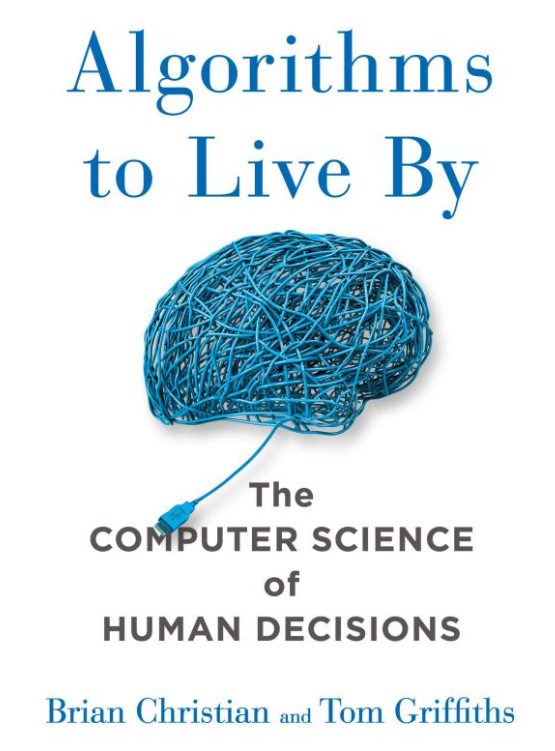
Books to read: Algorithms to Live By

This book is a solid read with ideas that apply to decision making across a broad spectrum of areas. The authors are able to make the math and conversation around algorithms map to life in well thought and articulated examples that should open your thinking to new ways to approach problems and opportunities.

A few sections that jumped out to me are referenced here or in the reviews, but I encourage you to take the book for a spin yourself.

The most prevalent critique of modern communications is that we are always connected; we’re not. The problem is that we are always buffered. The difference is enormous.

Algorithms to live by pp226

We are now consuming so much information, we cannot possibly process it all. We now queue information to consume, inhibiting real time engagement and leaving an inescapable feeling of “missing out” or need to “catch up”.

From Amazon:

An exploration of how computer algorithms can be applied to our everyday lives to solve common decision-making problems and illuminate the workings of the human mind.

What should we do, or leave undone, in a day or a lifetime? How much messiness should we accept? What balance of the new and familiar is the most fulfilling? These may seem like uniquely human quandaries, but they are not. Computers, like us, confront limited space and time, so computer scientists have been grappling with similar problems for decades. And the solutions they’ve found have much to teach us.

In a dazzlingly interdisciplinary work, Brian Christian and Tom Griffiths show how algorithms developed for computers also untangle very human questions. They explain how to have better hunches and when to leave things to chance, how to deal with overwhelming choices and how best to connect with others. From finding a spouse to finding a parking spot, from organizing one’s inbox to peering into the future, Algorithms to Live By transforms the wisdom of computer science into strategies for human living.

https://www.amazon.com/Algorithms-Live-Computer-Science-Decisions/dp/1627790365

Why I recommend this book:

I lead teams in the Pharma / BioPharma industries and we grapple with large challenges on a regular basis – the ideas presented in the book resonate with me as I think about both the scientific / math applications, but as importantly, the human implications. As leaders it is often required that we know enough about everything in our area of responsibility to help guide the decision making for the organization(s). How we go about prioritizing what to focus on, what to allow in the queue vs what we allow to drop off is a critical bit of surviving and thriving. The best bets are made by those who can sperate the noise from the actionable data. To get there, we need to filter and extrapolate from what we have to what we need to do. This book helps shape a number of interesting and workable ideas to explore in this space.


Design Thinking

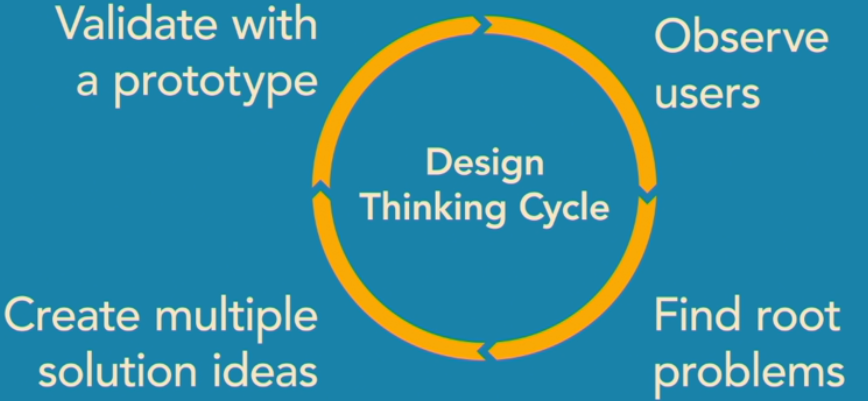
Design thinking is an approach that can be stand alone or a critical part if an agile delivery approach. It is at it’s heart, about inspecting and adapting, using iterative approaches to build value. The approach offers a number of great benefits, to include:

  • Quicker Starts – Since there does not need to be a robust final design spec prior to starting the iteration process, the team can get to real value much more quickly, focusing on the priority items as opposed to everything at once.
  • Clarity on purpose / objective – as the team starts the design process, the iterative and testing nature will help the group and owner try and discard multiple ideas and approaches, honing in on the highest value and driving clarity on what is important, as well as what is urgent, meaning a priority for initial value focus.
  • Needs driven development / investment – This is really an outcome of the prior value. As clarity and priority is achieved, the team will focus on what is next in line, and delivering the most value to the target outcome.
  • Reduction in “pet features”, meaning the ability to iteratively add value, and not have to have everything you MIGHT need defined up front prior to requirements lock allows product owners to be more selective in what they allow into the development cycle.  
Design Thinking Flow
Image Source: Presentation from Chris Nodder

To be successful, the product owner and lead needs to set clear goals as well as success, or acceptance criteria for these. As these are declared, the team must measure the results, early & often. This feedback on results loop will allow the team to test the ideas and have value stories to tell, with real world feedback that is incredibly powerful.

Having led teams and worked in large enterprises for a couple of decades, I see many people who are a bit jaded and do not see themselves as creative. What I have found though, is that most people are creative when properly stimulated and often welcome the opportunity to contribute and be a part of a solution and ideation process. As a design thinker, it is important to learn to harness this process and enthusiasm. The white board and sticky note approach, as well as sketching on paper provides safe ways to start the ideation, and can open the door to creative thinking.

The low fidelity ideation drives collaboration and conversation, while also saving money and time. Paper prototypes are a great way to do an idea walk through and pressure test User Interface (UI) or work flows.

The risk of the waterfall mentality, meaning the standard step wise life cycle methodology is real, but can be mitigated to some level but following a lean / agile approach with an iterative startup phase. 

The value of failing fast, applying learnings is tremendous, as described previously. You can expect to see results such as:

  • Clearer cost estimation – ideas are tested and thought through
  • Reduced risk – fast failure is much lest costly failure
  • Improved Communication – the high collaboration required for design thinking forces good communication from the start, creating a solid foundation for a team to interact across levels. 
  • Faster time to market, with the highest value elements. – there is still a long tail, but the work is now focused on the value elements as opposed to the waste, and the team can terminate once the target value or capability has been met, as opposed to building, debugging and testing features that are no longer useful.

Getting started does not require a large enterprise commitment, or even a strong management endorsement. Just start – don’t make it a big deal or seek to justify, let the results do the speaking / marketing for your team. People are attracted to success, and success breeds more success creating a “pull through”.

As the thinking and process takes hold, you can work on the organization sell through. 

  • By identifying key influencers from each group you work with, you can make them part of the process, and part owners of the success. 
  • Meet face to face and explain the process, as well as the value. The face time allows you to pull out some paper and a pencil, and walk through the approach, demonstrating the design thinking in your message!
  • As you engage, explore the dominate challenges with the current process that your team or stake holder are familiar with. There are usually a number of clear pain points around start up time, risk incurred, long “dark windows” of development time, and long tails of debugging and delays.
  • The conversation opens the door to explain & explore how design thinking removes or mitigates those issues by providing much tighter engagement, ownership and communication as well as a value focus!

There is so much more that can be said on this topic, as well as the clear intersection with the agile world and approach, but this is a good initial exploration to get you started on the journey.


Agile Manifesto

The Manifesto for Agile Software Development came out of a discussion among 17 people in the Utah mountains. The story around the start in the Snowbird  ski resort is an interesting read, but fundamentally it is about looking for a better way of doing software development, and by extension, almost any other delivery activity.

Agile is a simple idea at its heart, though an entire industry has sprung up around the idea and approach, in many cases, making it anything but agile!

The Manifesto for Agile Software Development is as follows

We are uncovering better ways of developing
software by doing it and helping others do it.
Through this work we have come to value:

Individuals and interactions over processes and tools
Working software over comprehensive documentation
Customer collaboration over contract negotiation
Responding to change over following a plan

That is, while there is value in the items on the right, we value the items on the left more.


Imposter Syndrome – Channeling the noise for growth

An article in Harvard Business Review titled “Mentoring Someone with Imposter Syndrome” resonated with me. The article covers the topic well and offers the following main points for guidance in mentoring:

  • Empirically challenge negative self-talk
  • Affirm, affirm, and affirm some more
  • Deliberately counteract stereotype threat
  • Share your own imposter stories
  • Do not allow your mentee to give you all the credit

Reflecting on my career, I remember too well the feelings of being an imposter when I started in the industry! I came out of the US Marines, and bounced around a few jobs before landing at a steel mill as an automation electrician and team lead. While there, I felt out of my depth a number of times as I learned on the job, but at that time, I did not have the advantage of the internet and the world at my fingertips that I do now. I started my own business while in that role, teaching myself development focused on the emerging world of websites and web applications. Again, switching my frame of reference, I had to present myself with confidence, and at the same time, learning a whole new lexicon and way of thinking. From there, I joined a consulting firm in the marketing department, again learning a new vocabulary and thinking pattern before jumping again into a global consulting practice and eventually leading the internet practice. I learned to keep my mouth shut unless I had something valuable to say, and to work my tail off in the evenings to answer all the questions I accumulated during the day! I ran 17+ servers in my home and taught myself multiple programming languages while others just assumed I knew the space and had worked it for years as they had.

I lived with the regular feeling of potentially being “discovered” to be inadequate. I channeled those feelings into work and self improvement, leading to constant growth. Over the years since then, I have continued to change my path many times and coming to the point where it felt unnatural to not be outside my comfort zone to some degree.

As I grew more comfortable with the feeling of “being inadequate”, and learned to embrace the feeling of being outside my comfort zone, I transitioned to a place where I started to seek out those experiences for high growth opportunities. I am now in a mentoring role for a number of people in my industry and outside it as well. I find that the points outlined in this article are solid advice and I encourage a read through if you are feeling like an imposter, or if you are seeking to mentor someone.

The negative talk and feelings of doubt are one of the first things I try to tackle in a mentor relationship. I build on that with sharing much of the story in this article, with specifics about my journey. I try to make it clear that we all have times of doubt, and if we never do, we are likely not stretching ourselves nearly enough.

Mentoring is tremendously rewarding, and any mentor will be even more effective directly addressing the self doubt paradigm.


Personal Branding – Presentation and Links

I am a believer in personal branding and the value it provides. If you don’t manage the perception of yourself and your value in the industry, it is managed for you, and not always in a flattering manner. Personal branding is about owning that perception and shaping it to reflect the real you – how you want to be seen.

Some time ago, I was asked to give an internal talk on personal branding, as a part of a larger change initiative I was leading in my organization. We are fortunate enough to have access to LinkedIn Learning, which I strongly recommend. Using that as a starting point for references, I then looked beyond that to the public internet and what others had to say on the topic. From that work came the included deck. These materials were based on the great work from others in this space and they are credited in the deck – I encourage you to check out the classes they have provided as well as the websites linked in the materials.

You can download the deck here, but the bulk of the talk is the conversation around the materials. The linked resources and references are a great start for those conversations.


Armor up…

I was recently reminded of an old ritual we used to engage in from my consulting days – prior to entering a client site, we would prep and then “armor up” by putting on our suit jackets / sport coats. This was a symbolic process to ready us for the engagement and a reminder to not take anything too personal. I had a different perspective on it as I had come from the US Marines, and “Armor up” had a bit of a different connotation to me initially. The idea stays consistent though, in that the phrase is an indicator that it is time to shift your mindset, and ready for engagement, whatever that may be. We need to be conscious when presenting ourselves in our working environments, to think both tactically and strategically.

What are the outcomes we are after? What is our conversation partner looking for and what barriers might we need to address. What can we give and what MUST we get in this tactical engagement, to further our strategic goals?


What makes a good manager?

A project at Google spent time researching what defines a great manager at Google, and through that identified the top 10 traits to grow. As listed they are:

  1. Is a good coach
  2. Empowers team and does not micromanage
  3. Creates an inclusive team environment, showing concern for success and well-being
  4. Is productive and results-oriented
  5. Is a good communicator–listens and shares information
  6. Supports career development and discusses performance
  7. Has a clear vision/strategy for the team
  8. Has key technical skills to help advise the team
  9. Collaborates effectively
  10. Is a strong decision maker

The last two were new additions to the list, and I believe reflect the need to both reach out to your broader organization to expand your thinking, while simultaneously understanding when the time has come to step in and drive to a decision – the leadership courage to make a decision in the face of a constantly shifting landscape, and then stand by and manage through that decision.

as our company grew in size and complexity, demands on our managers and leaders increased as well. From the results of our employee survey we learned that Googlers wanted to see more effective cross-organization collaboration and stronger decision making practices from leaders

– Google Article

As the Google team identified, there is a need for decisive leadership in a time where we are bombarded with more and more data and “facts” or opinions on every decision to be taken – this coupled with FOMO (Fear of missing out) can lead to a situation where teams spend an unfortunate amount of time in the unproductive state of spinning. This leads to a negative impact on moral and reduces productivity. Contrary to that, a decisive leader, who empowers a good team and uses strong communication skills to get thoughts drawn out from the team and discussed, often has the facts actually required for the decision in the first day of deliberation! The ability to collaborate quickly and communicate the rational, get confirmation and drive to the decision is the real differentiator and the combination for real productivity!


TED: Draw Toast! (Creative Problem Solving)

Tom Wujec has a TED talk on creative problem solving using a technique he calls “drawing toast”. The idea is not new, but the packaging and approach is solid and builds on innovation thinking. I posted a video from another TED talk about empowering the team, and ensuring all voices are heard, and this ties in nicely with that thought. I am a fan of process mapping and achieving clarity, as a step toward optimization or evaluation of opportunity, and I will be adding these techniques to my tool box. You can watch the video below, and link to the website Tom has created here.

Drawing the process

Establishing nodes and links – toast making as a foundation for process mapping teaches how to take complex problems and break them into discrete units.

The creative process builds from individuals, to component based to group synthesis, resulting in an optimum systems model

Watching the process progress, it is intriguing to watch the optimal number of process steps shift, as complexity is revealed and then sorted.

Taking these ideas and approaches and applying the thinking to the business at hand is the logical next step.


Books to read: Sticky Wisdom: How to Start a Creative Revolution at Work

I got this book while working at Pfizer, and helping lead an innovation transformation in the consumer health division. We were looking to reboot out approach to product development and creativity in general, and as a part of that we invested in a great set of programs that I still benefit from now, long after those roles. This book is from the ?WhatIf! company, and has many little insights that can help unlock the creativity in you, and in your team.

The book asks a few key questions and offers accompanying insights to build on.

  • What if you could spot what’s killing creativity in your organization right now?

  • What if you could stop yourself squashing ideas and start growing them instead?

  • What if you could help everyone at work to be creative?

  • What if you stopped talking about how important creativity is and started to take practical steps to make it happen.

But most of all….  What if there was a step-by-step guide that showed you exactly how to do it?

Instinctively we all know that creativity at work is important,but for many of us it feels either difficult or intimidating.

Sticky Wisdom delivers powerful insights that take creativity out of the hands of ‘creative people’ and puts it back where it belongs, with all of us. It breaks creativity out into six practical behaviours and shows how every one of us – not just the wacky geniuses – is packed with creative potential. We can start a creative revolution by adopting six behaviours:

  1. Freshness
  2. Greenhousing
  3. Realness
  4. Momentum
  5. Signalling
  6. Courage

These are the behaviours you can identify in highly creative and high-performing teams. These are the behaviours that you can start applying today to revolutionize your life.

Suddenly creativity isn’t such a mystery. Sticky Wisdom makes it easy to talk about, easy to practise and easy to remember.Above all, it makes it easy to get on and do!

One of the points made in the book that makes great sense is the idea that creativity and innovation are not synonymous. Creativity only becomes innovation when the ideas are useful, or described another way, add value. The book is full of little stories and examples to make the point, as illustrated by an exercise with a food retailer team to have the team role play being a meal cooked in a wok. The book goes on to provide examples of the insights gained such as oil that changes color when ready, food that is pre-sliced and provided in numbered packages to sequence cooking properly, and more. These ideas came from the interactive role play and subsequent discussion. This type of activity generally takes me outside my comfort zone, as it does many, but that is the point.

In other posts, I reference the idea of stream jumping, which I got from this book and training. I also value the idea of Green Housing, which is broken into a series of steps outlined in the book consisting of:

  • Suspend Judgement
  • Understand
  • Nurture
  • React
  • Assume
  • INsist

Another key concept from this book, though not unique to the book, is signalling. Part of the accompanying training is around the value of being intentional with signalling to a partner in conversation what your intentions are, or where you are trying to take the conversation. This has been a valuable tool in my kit now for years, as I have learned to be much more clear with my intentions in communication, setting up my audience or partners to better receive and understand my messaging.

Why I recommend this book:

This book is full of great insights, and is a quick read. It can be used to bookmark and drop in and out of, or used as a reference to work through as a team. You cannot read this short reference without gaining value, even if you have extensive experience with change and innovation. It will spark ideas you have forgotten and give you new ones to build on. I cannot go into the full content of the book in a short post, but I encourage you to spend the few dollars it costs to buy this book. It was printed some time ago, but the ideas are as relevant today as when printed the first time!